Guide · product
The garments that make DTF look expensive
The press is only half the print. Here's the blank list we actually load on trucks, tiered by budget — and the color strategy that matters more than the brand name.
Tier 1: The volume workhorse
Gildan Softstyle (64000). When the order is 800 units for an expo, this is the answer: consistent sizing, a smooth face that takes transfers cleanly, and the best cost-per-unit in the game. Guests read it as “nice shirt,” procurement reads it as “under budget.” Its one limit: the lighter fabric shows premium artwork slightly less richly than the tiers above.
Tier 2: The crowd-pleaser default
Bella+Canvas 3001. Our default for corporate events and activations. Combed ring-spun cotton with a retail drape, a huge color catalog, and a surface DTF loves — prints sit soft and saturated. If you're only going to remember one blank name from this guide, it's this one. The Airlume cotton also peels beautifully on camera, which activation producers care about more than they expect to.
Tier 3: The premium flex
Heavyweight 6–6.5oz boxy tees (garment-dyed styles in the Comfort Colors family). For brand launches and streetwear-adjacent audiences, the heavyweight hand instantly signals “this is real merch, not a giveaway.” Muted garment-dye tones under vivid DTF color is the current best-looking combination we press. Budget roughly 2–3× the Tier 1 blank cost.
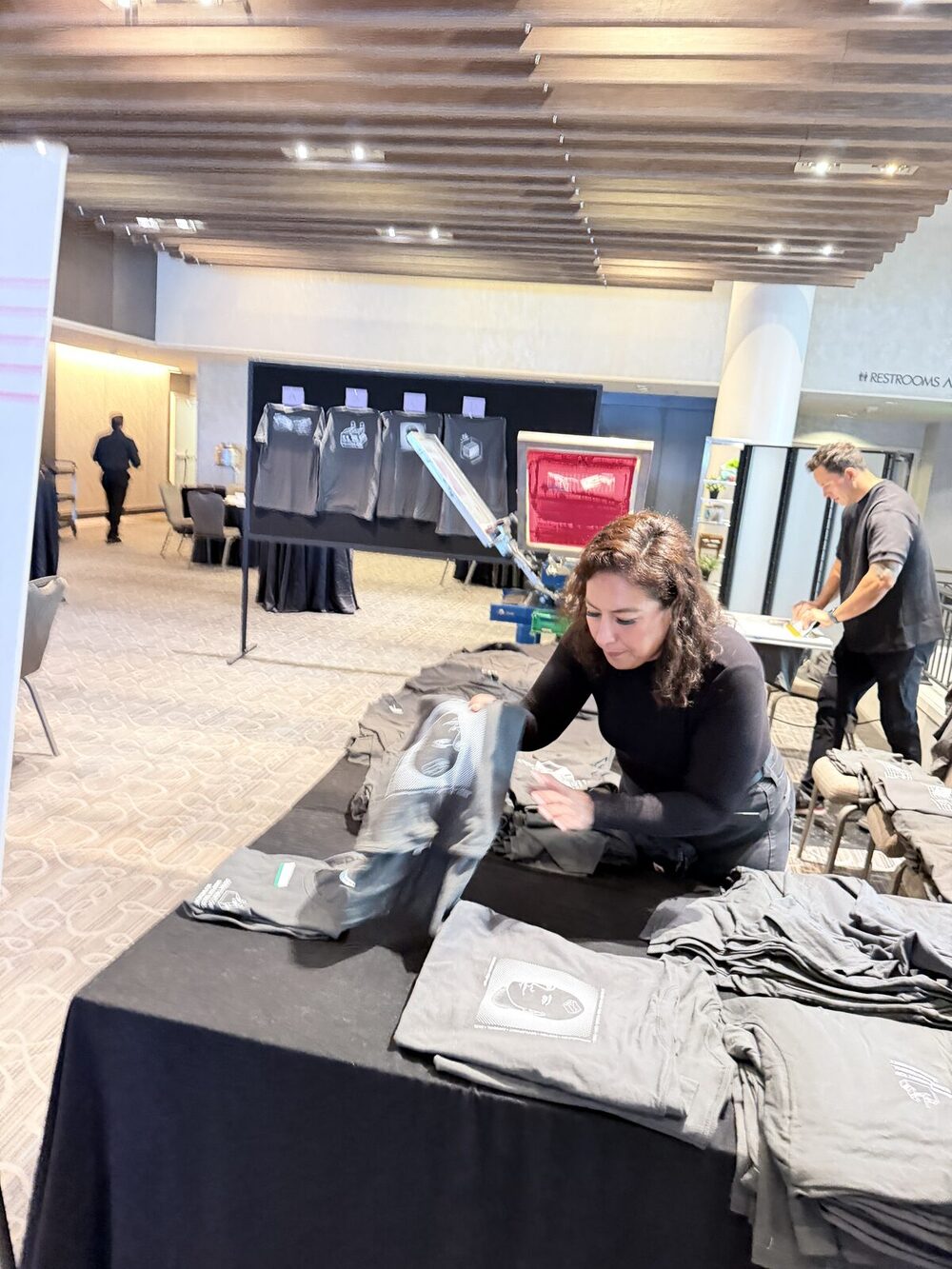
Beyond tees
- Hoodies and crewnecks — the perceived-value kings. At fall and winter events, a pressed hoodie line doubles station traffic.
- Canvas totes — fastest press on the menu (no size decisions!) and the default for expo swag with a sustainability brief.
- Performance polys — for runs, tournaments, and jersey moments; DTF's moderate press temp keeps poly from scorching or migrating.
- Caps — structured shapes like the Richardson 112 run on cap presses at our hat bar, usually with pressed patches for that stitched look at press speed.
Color strategy beats brand strategy
Two rules from thousands of pressed garments. First: offer three garment colors, max — one dark, one light, one brand-adjacent — or your size wall becomes a warehouse. Second: dark garments make DTF sing. The built-in white underbase means full color pops off black and navy in a way guests photograph constantly. If the event has one garment color, make it dark and let the artwork glow.
Extended sizes are a garment decision, not an afterthought
Here's a trap we watch planners fall into: they pick a beautiful blank, then discover at order time that it stops at 2XL. Inclusive sizing has to be checked at the catalog level. The Gildan Softstyle runs to 4XL or 5XL in core colors; the Bella+Canvas 3001 goes to 4XL in its bestsellers but thins out in fashion shades; many garment-dyed heavyweights cap at 3XL and skip talls entirely. Our rule: before any blank makes the menu, we confirm the top two sizes exist in the colors you chose, because a 3XL guest who hears “we only have that in the beige one” remembers the event differently than everyone else. Budget note: extended sizes typically add $1–2 per unit, which is the cheapest goodwill you'll buy all year.
How each fabric behaves under a 300°F platen
Transfers don't care what they stick to nearly as much as the garment cares about the heat. Ringspun cotton is forgiving — press, peel, done. Garment-dyed blanks arrive holding more moisture, so our crews give them a two-second pre-press to steam it out before the transfer goes down; skip that and you get edge-lift on maybe one shirt in twenty. Polyester wants the temperature stepped down and the dwell adjusted to dodge scorch lines and dye migration, which is exactly why the compatibility answer exists. None of this is your problem at a staffed station — but it's why a menu mixing cotton tees, poly jerseys, and garment-dyed hoodies runs smoothest when the crew knew the mix in advance.
Order a size run of samples first
For any event over a couple hundred units, spend the ~$60 on a sample size run of your top-choice blank two weeks before the garment order is due. Three things get decided in that box: whether the color matches your brand deck in real light instead of a catalog render, whether the fit runs true (boxy heavyweights wear a full size bigger than a Softstyle), and whether the hand-feel matches the price tier you're paying for. SoCal blank warehouses turn samples around in two to three days, so this costs you almost no calendar. It routinely re-ranks a planner's tier list — and changing your mind at the sample stage is a rounding error; changing it at the pallet stage is a story you tell for years.
Want this translated into an order for your headcount? The 500-guest worksheet includes the size curve, or ask a producer to spec a garment mix inside your budget.